


Electromobility in Poland and Real Infrastructure Challenges
Electromobility is developing at lightning speed, yet… when you look at the state of charging infrastructure, it still raises concerns. The unfortunate list of countries facing EV charging station shortages remains long—and Poland has been on it for many years. So can we really blame drivers for being hesitant about switching to electric vehicles?
EV Market Growth vs. Charging Station Shortages
The electrification of transport in Poland has clearly accelerated—that’s a fact. However, charging infrastructure remains the system’s Achilles’ heel—that’s also a fact. Without an extensive network of chargers, further development of electromobility may slow down. That is why it is crucial to deploy more charging stations not only in cities, but also in suburban and rural areas.
A Private Charging Station as a Solution to Systemic Problems
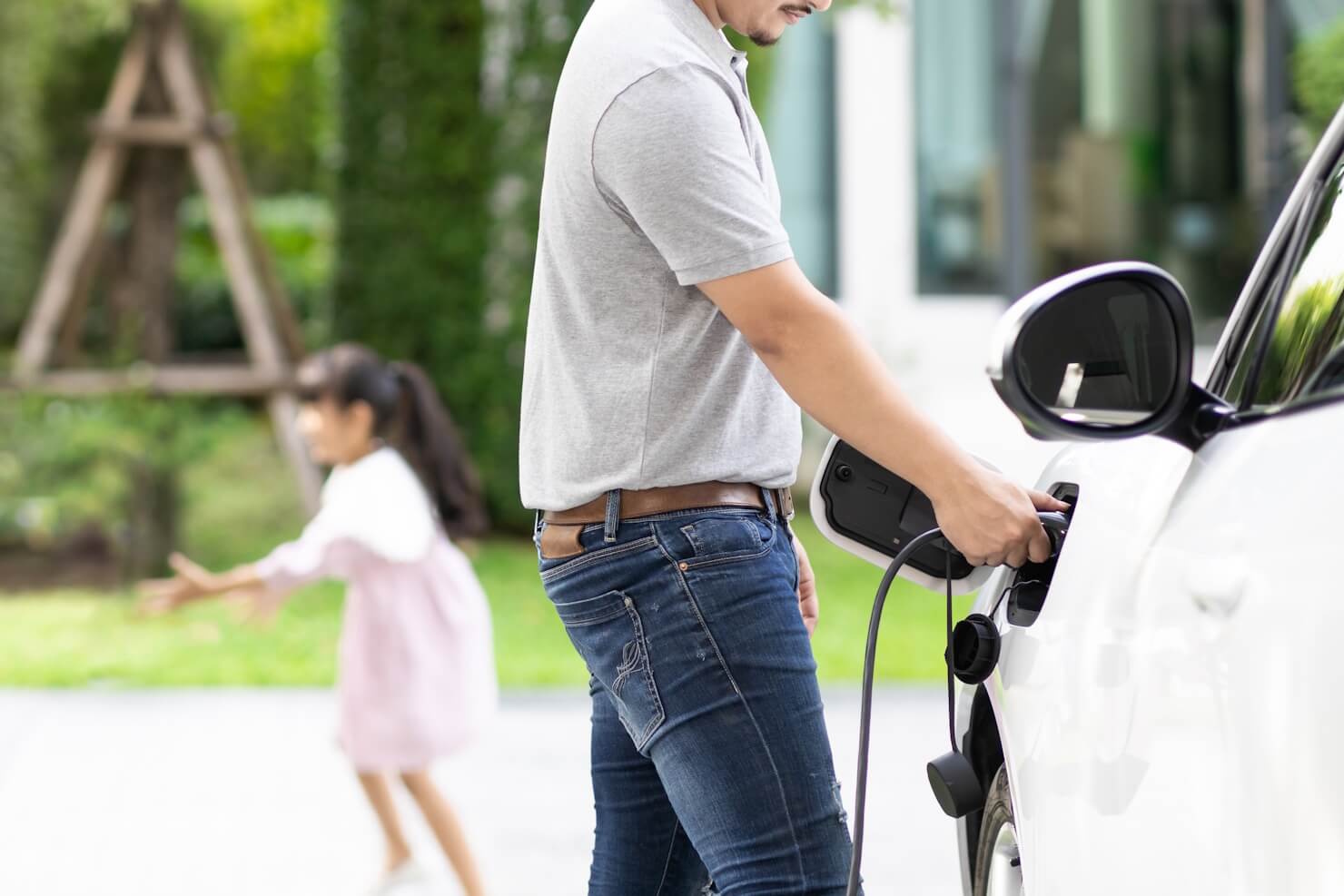
Meanwhile, the best solution seems to be having your own charging station – at home, in a company, or in a multi-family building. This gives you the certainty that your car can be charged at any time—without queues, without higher fees, and without the risk of not reaching a charging point due to running out of power.
Everyday Charging Convenience and Real Savings
Having your own charging station means you can charge your car overnight in the garage, during the day at a company parking lot, and enjoy the comfort of having your vehicle ready for travel at any time. Charging with night tariffs is usually cheaper than using commercial charging points, and additional savings appear when the station is integrated with a photovoltaic system, allowing you to charge using energy you generate yourself. As a result, operating costs decrease, and the user gains confidence in the quality and origin of the energy.
Smart Features of Modern EV Charging Stations
But that’s not all. Modern charging stations offer intelligent features that allow you to optimize the charging process in terms of cost, energy availability, and individual needs. Dynamic Load Management (DLM) monitors energy consumption in the building and automatically adjusts charging power to avoid exceeding system capacity, preventing overloads or tripped breakers. Remote control via a mobile app enables full supervision of the charging process, scheduling, monitoring energy usage, and managing user access—especially useful for residential communities or businesses.
V2G and V2H Technologies – The Future of Energy and Electromobility
Bidirectional energy flow technologies are also proving highly effective. V2G (Vehicle-to-Grid) systems allow electricity from a vehicle’s battery to be fed back into the power grid, supporting its stability. V2H (Vehicle-to-Home), on the other hand, enables the use of energy stored in the vehicle battery to power a home during outages or peak demand. Although these solutions are still in early stages of deployment, they indicate the direction of electromobility development and highlight the importance of smart solutions in everyday EV use.
AC or DC – Which Charger for Home and Business?
In home conditions, alternating current (AC) charging stations are most commonly used, typically ranging from a few to several kilowatts depending on the installation. For many households, the optimal solution is a three-phase 11 kW charger, which can fully charge most batteries overnight. Faster direct current (DC) stations are mainly used along major transport routes and in companies with vehicle fleets, where charging time is critical.
Safety and Reliability of EV Charging Stations
The safety of charging stations is equally important. Professional installation, dedicated circuits, proper overcurrent and residual current protection, as well as regular maintenance, ensure reliable and safe operation for many years. Additionally, intelligent systems monitor device status and prevent overloads, providing full control over the charging process.
Why Choose a Proven EV Charger from Lenergizee?
When deciding on your own charging station, it is worth opting for certified solutions compliant with European standards and ready for future technologies. EV chargers available from Lenergizee are designed with safety, scalability, and compatibility with home, business, and photovoltaic installations in mind. It is an investment that meets both current and future needs.
FAQ – Private EV Charger
Is installing a private EV charger at home cost-effective?
Yes. A private charger can significantly reduce charging costs compared to public stations, especially when using night tariffs or photovoltaic systems.
What EV charger power is best for a single-family home?
The most commonly recommended option is an 11 kW AC charger, which offers a good balance between charging time and the capabilities of the electrical installation.
Is every electrical installation suitable for EV charger installation?
Not always. Before installation, it is necessary to analyze the connection capacity and apply appropriate protections.
What is Dynamic Load Management (DLM)?
It is an intelligent system that automatically adjusts charging power to the building’s current energy consumption, protecting the installation from overload.
Can an EV charger work with solar panels?
Yes. Integration with a PV system allows you to charge your car with self-generated energy, reducing costs and increasing energy independence.


