


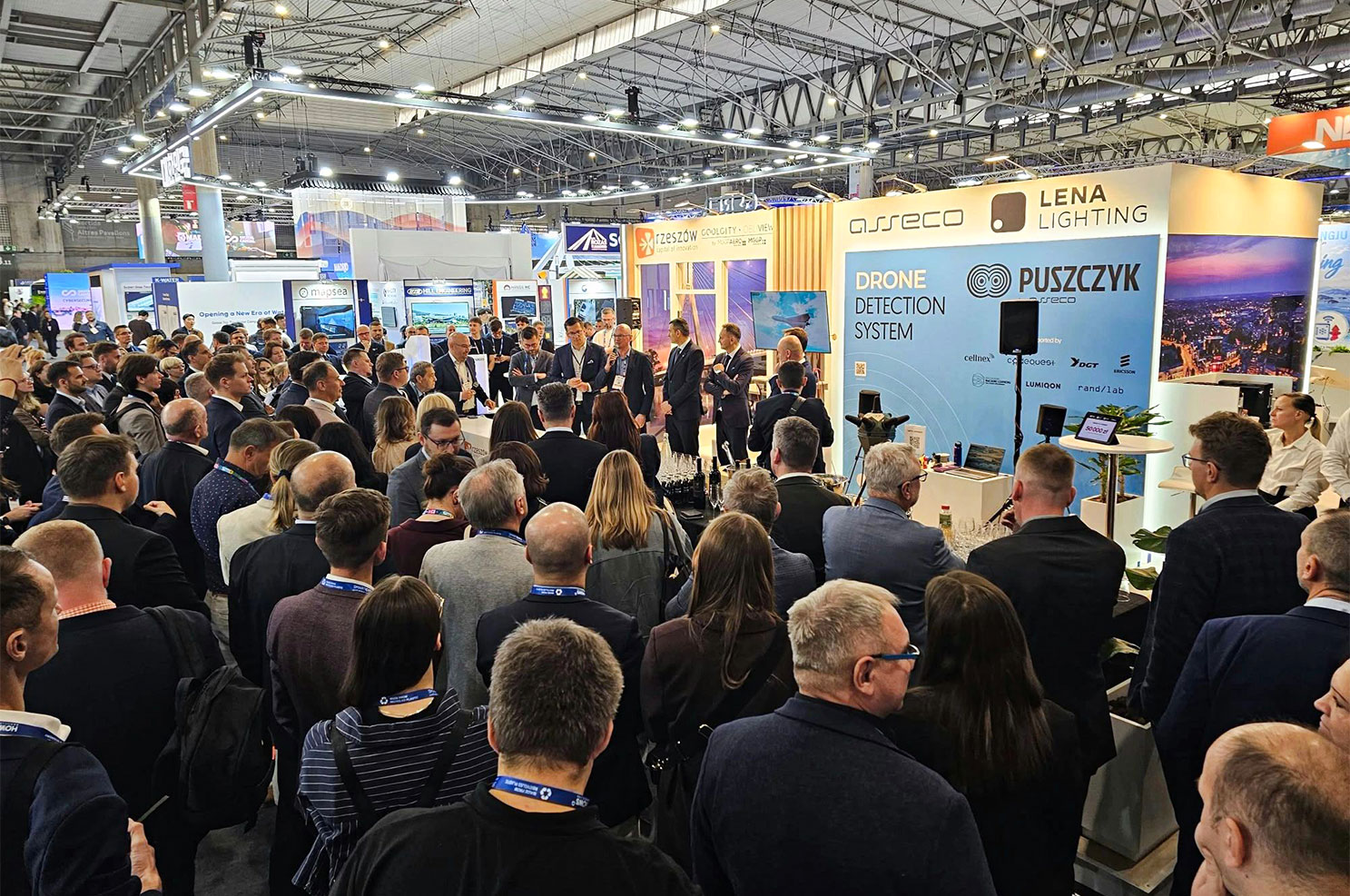
European e-mobility is accelerating. Electric vehicles are achieving record sales figures, while cities, businesses, and investors are increasingly looking for solutions that will help prepare infrastructure for the changes ahead. This trend was clearly visible at Smart City Expo World Congress 2026 in Barcelona, one of the world's most important events dedicated to smart cities, digital transformation, and sustainable mobility.
This year's edition brought together representatives of local governments, technology companies, energy transition experts, and providers of solutions supporting the development of modern cities. It is becoming increasingly clear that e-mobility is no longer a standalone market sector, but rather part of a broader ecosystem encompassing energy management, public transport, parking infrastructure, renewable energy sources, and intelligent urban resource management.
Photo source: City of Rzeszów
Among the showcased solutions were technologies from Lenergizee, presented together with the City of Rzeszów and Asseco Poland. We would like to thank our partners for the opportunity to showcase solutions that address the real needs of modern cities and businesses preparing for the rapid growth of electric vehicle adoption.
Barcelona shows the direction of European e-mobility development
For years, Smart City Expo has been setting the direction for the development of intelligent cities. It is where representatives of public administration, business, and the technology sector come together to discuss the future of transportation, energy, and digital services for citizens.
This year, one of the most frequently discussed topics was e-mobility and the need to expand charging infrastructure. It is no surprise. As the number of electric vehicles grows, cities must prepare public spaces, parking facilities, residential developments, and commercial properties to meet the evolving needs of users.
LENERGIZEE BUSINESS OCPP 22 kW. A charging station ready for smart city needs
During the event, we showcased the LENERGIZEE BUSINESS OCPP 22 kW charging station with a Type 2 socket, equipped with OCPP communication and RFID authentication.
This solution has been designed for locations where remote management, access control, and user billing capabilities are essential. Thanks to OCPP compliance, the charger can be integrated with charging infrastructure management platforms used by businesses, developers, parking operators, and local authorities.
Key features of the showcased solution include:
- AC charging power up to 22 kW,
- Type 2 socket,
- OCPP communication protocol,
- RFID authentication,
- remote device monitoring,
- integration with charging management platforms,
- user billing capabilities,
- suitability for private, commercial, and public-sector projects.
As a result, the device can serve not only as a standalone charging point but also as part of a larger EV charging infrastructure network.
LENERGIZEE BUSINESS OCPP 22 kW at a glance
- ✅ AC charging power up to 22 kW
- ✅ Type 2 socket
- ✅ OCPP communication
- ✅ RFID authentication
- ✅ Remote management and monitoring
- ✅ User billing capabilities
- ✅ Suitable for business, municipal, and commercial applications
- ✅ Ready for integration with operator platforms
Greater flexibility with a dedicated mounting pedestal
Also showcased at our stand was the dedicated Lenergizee mounting pedestal with a height of 1200 mm, allowing the charger to be installed wherever wall mounting is difficult or impossible.
This solution is ideal for:
- municipal parking areas,
- government and administrative buildings,
- residential developments,
- office buildings,
- hotels,
- corporate parking lots,
- retail and commercial facilities.
For designers and investors, this means greater freedom when planning charging infrastructure and easier network expansion in the future.
Local governments are preparing for the growing number of electric vehicles
The development of e-mobility has become an integral part of the strategy of many European cities. Local governments recognize that the availability of charging infrastructure affects not only environmental goals but also residents' comfort, investment attractiveness, and local economic growth.
Modern charging infrastructure is beginning to play a role similar to intelligent transport systems, Park & Ride facilities, and digital public services. Residents expect convenient access to EV charging, while cities must create conditions that support continued growth in e-mobility.
This is why solutions equipped with OCPP, RFID, and remote management functionalities are becoming increasingly important in smart city projects.
Charging infrastructure is becoming a new standard in real estate projects
Expectations within the real estate market are also changing. Developers and property managers are increasingly incorporating EV charging infrastructure into their projects from the earliest design stages.
This applies to residential developments, office buildings, logistics parks, and shopping centers alike. Access to charging stations is becoming an additional advantage for tenants, residents, and visitors.
In many cases, the ability to manage access via RFID and allocate charging costs is just as important as having charging points available.
Fleet electrification is gaining momentum
Businesses upgrading their vehicle fleets are also playing an increasingly important role in market growth.
Companies operating in services, logistics, and sales are more frequently incorporating electric vehicles into their fleet strategies. This creates the need for charging infrastructure at company headquarters, warehouses, and employee parking facilities.
In these environments, the following functions are particularly important:
- user authentication,
- energy consumption monitoring,
- management of multiple charging points,
- session reporting,
- charging cost allocation.
This is why OCPP-compliant solutions are becoming the foundation of modern fleet charging infrastructure.
Record EV sales confirm the direction of change
The presence of charging infrastructure at events such as Smart City Expo is no coincidence. Market data clearly shows that Europe is currently experiencing a period of rapid e-mobility growth.
According to ACEA data, more than 1.6 million electric vehicles were registered in the European Union between January and August 2026, representing approximately 45% year-over-year growth. At the same time, electric vehicles reached a 21.7% share of the new vehicle market, surpassing gasoline-powered cars in registrations for the first time.
Transport & Environment also indicates that the European market will continue to accelerate thanks to the growing number of new EV models and improved accessibility for both private and business customers.
What were visitors asking about most often?
At Smart City Expo World Congress 2026, the most common questions at our stand concerned:
- building charging infrastructure in cities,
- integrating chargers with OCPP platforms,
- preparing residential developments for e-mobility,
- charging session billing and user management,
- fleet charging solutions,
- integration with photovoltaic systems,
- scaling infrastructure as EV adoption continues to grow.
This demonstrates that discussions around e-mobility are increasingly focused not on the vehicles themselves, but on efficient energy management, user management, and scalable infrastructure.
"Rising electric vehicle sales clearly show that e-mobility has become a permanent part of Europe's transport landscape. During Smart City Expo 2026, we had the opportunity to discuss with representatives of cities, businesses, and the technology sector how to prepare infrastructure for the continued growth of electric vehicles. This is why scalable and intelligently managed charging solutions are becoming increasingly important."
The future of e-mobility is being built today
Recent market data and discussions held during Smart City Expo World Congress 2026 lead to one clear conclusion: e-mobility is no longer the future, it is the present of European transportation.
The growing number of electric vehicles will require further investment in intelligent charging infrastructure capable of serving residents, businesses, corporate fleets, and public institutions.
Lenergizee's participation in the event provided an excellent opportunity to showcase Polish innovation on the international stage and to discuss the challenges European cities will face in the coming years. Through collaboration between technology providers, businesses, and local governments, it is possible to create modern, sustainable, and citizen-friendly cities ready for the future.


