


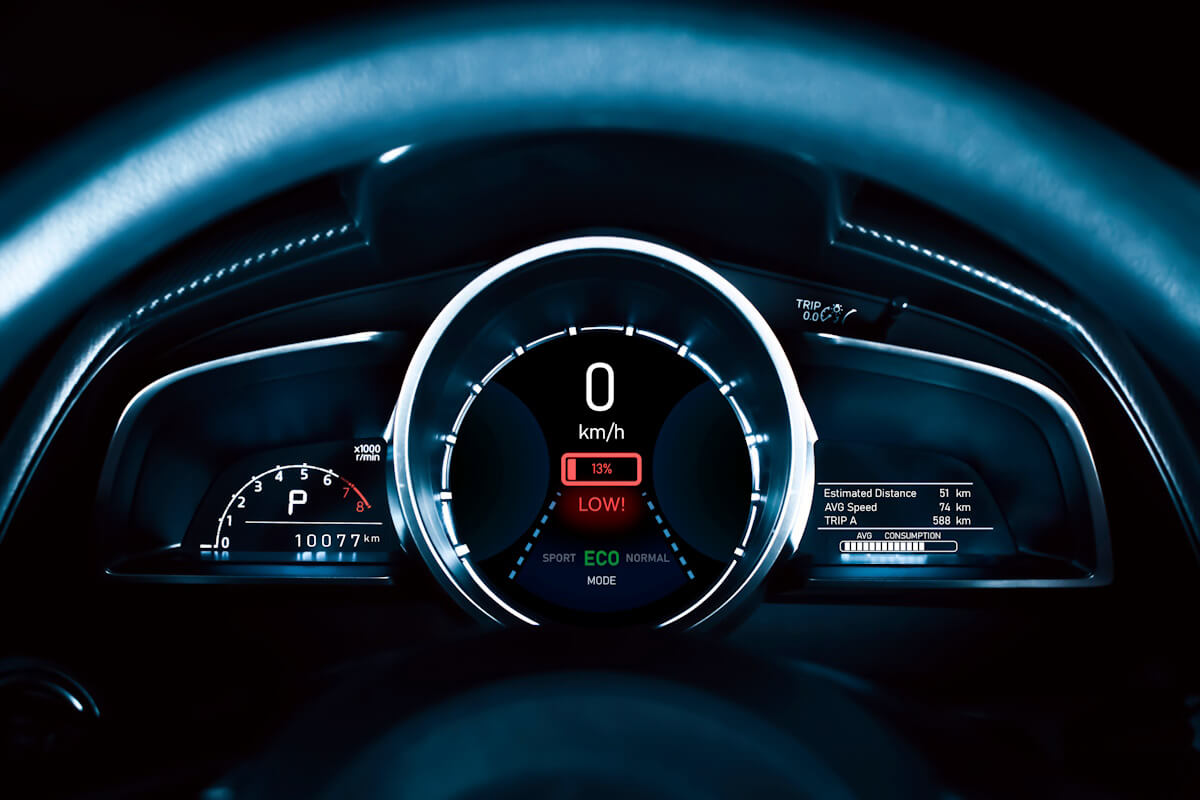
For years, the automotive world has undergone a revolution, when electric vehicles have become more and more popular. While in the past their scope was questionable, we are currently observing dynamic development of technology, which is significantly changing this state of affairs.
Thanks to modern batteries and innovative solutions, electric cars are becoming more and more competitive compared to combustion vehicles.
In this article, we will take a closer look at what factors influence the range of electric vehicles and how it can be optimize.
Battery capacity - a key factor determining range
One of the key factors affecting the range of an electric vehicle is its battery capacity. The larger the capacity, the more energy can be stored, which translates into a longer travel range. Modern electric cars offer various battery capacities, giving consumers the opportunity to choose a vehicle tailored to their individual needs. For people who mainly travel around the city, a vehicle with a smaller battery capacity may be sufficient, while for those who plan to travel long distances, it is recommended to consider an option with a larger battery.
Energy efficiency - the key to savings
Another important factor altering the range of an electric vehicle is its energy efficiency. This means how much energy a vehicle uses to cover a certain distance. Compared to traditional combustion vehicles, electric cars are much more energy efficient, which translates into savings and extended travel range.
Atmospheric conditions - a factor worth taking into account
Atmospheric conditions may have a significant impact on the range of an electric vehicle. Low temperatures can reduce battery efficiency, reducing the vehicle's range, especially when more energy is used to heat the cabin in winter. Likewise, high temperatures can negatively impact the battery during the summer months. It is worth remembering that extreme weather conditions may reduce the actual range of the vehicle compared to the values provided by the manufacturer.
Driving style - key to energy savings
The way you drive your vehicle has a significant impact on its range. Aggressive driving, with frequent acceleration and braking, can significantly shorten the vehicle's range, while smooth and economical driving, together with the use of energy recuperation systems, can contribute to increasing the range. Therefore, it is worth adapting your driving style to the specificity of an electric vehicle in order to maximize efficiency.
Charging - a key process for maintaining range
The charging process of an electric vehicle has a significant impact on the durability of the battery and its range. There are several charging methods, ranging from standard home sockets to fast charging stations. However, it is worth remembering that frequent use of fast charging stations may negatively affect the condition of the battery in the long run. Therefore, proper management of the charging process is crucial to keep the battery in good condition and ensure maximum vehicle range.
Range optimization - new possibilities thanks to innovative materials
Modern technologies, such as foamed EPP, can significantly influence the range of electric vehicles. Thanks to its lightness, strength and resistance to weather conditions, EPP is becoming an increasingly used material in the automotive industry. The use of EPP for the production of the body or cabin insulation can significantly increase the vehicle's range and improve travel comfort.
To sum up, the range of electric vehicles depends on many factors, such as battery capacity, energy efficiency, weather conditions and driving style. Appropriate management of these factors and the use of innovative technological solutions can contribute to increasing the range and improving travel comfort for users of electric vehicles.
FAQ (Frequently asked questions):
- What are the most important factors impacting the range of electric vehicles?
- The most essential factors are battery capacity, energy efficiency, weather conditions, driving style and the charging process.
- Does larger battery capacity always mean greater range of an electric vehicle?
- Yes, greater battery capacity generally translates into greater travel range, but energy efficiency and other factors that affect energy consumption must also be taken into account.
- How do weather conditions impact the range of an electric vehicle?
- Cold temperatures can reduce battery efficiency, reducing range, especially when energy is used to heat the cabin. High temperatures can also negatively alter the battery.
- Does aggressive driving style shorten the range of an electric vehicle?
- Yes, aggressive driving with frequent acceleration and braking can significantly shorten the vehicle's range. Driving smoothly and economically can help increase your range.
- What are the recommendations for the electric vehicle charging process?
- It is recommended to properly manage the charging process, avoiding frequent use of fast charging stations, which may negatively modify the condition of the battery in the long run.
- How can modern technologies, such as foamed EPP, influence the range of electric vehicles?
- The foamed EPP material, due to its lightness, durability and resistance to weather conditions, can increase the vehicle's range and improve travel comfort by using it in the production of bodywork or cabin insulation.


