


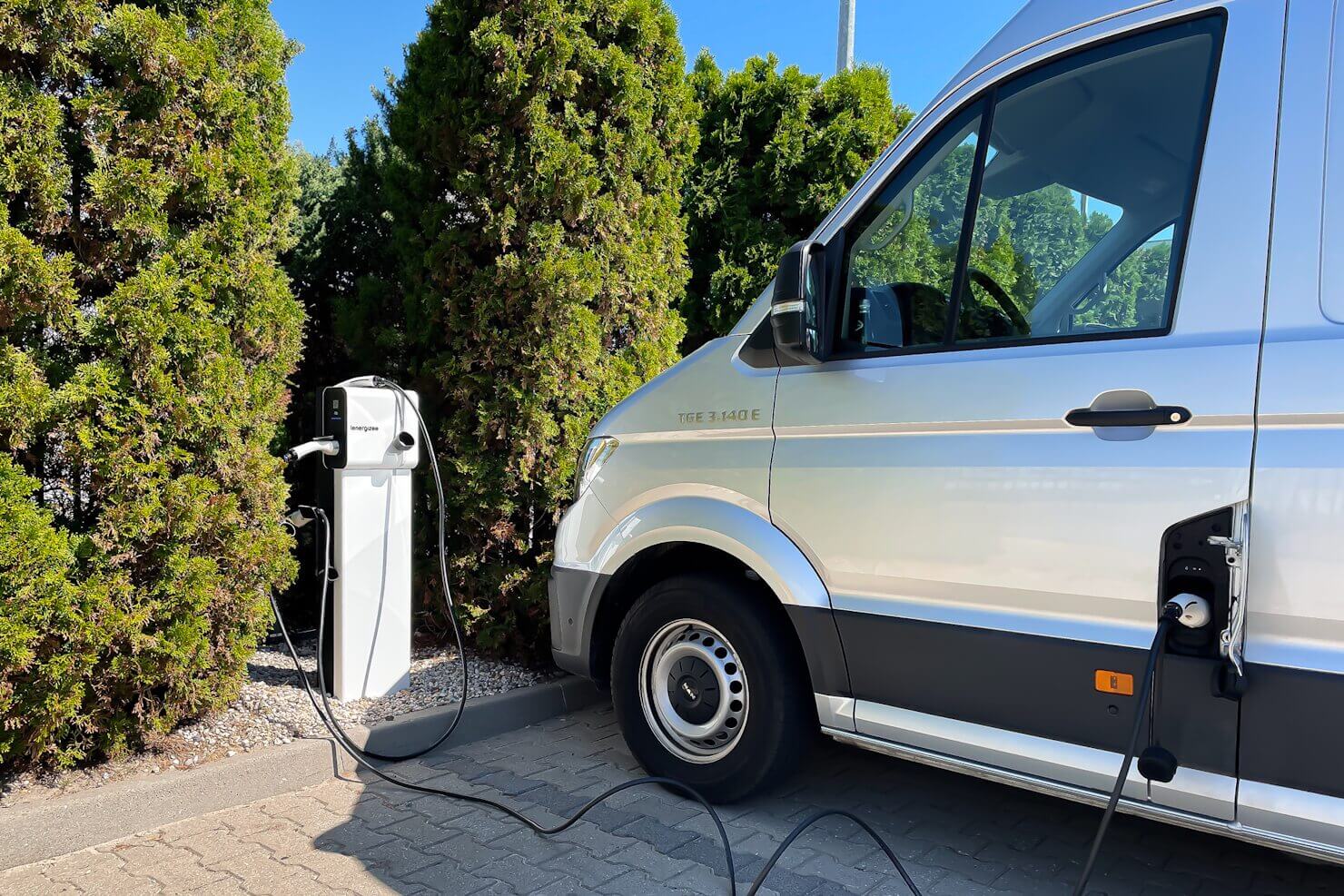
In the context of electromobility, 2026 marks another period of dynamic change for both Poland and Europe as a whole. The growing number of electric vehicles, the rapid expansion of charging infrastructure, the development of new technologies, and successive EU regulations are making the e-mobility sector increasingly mature and accessible to a broader range of users year after year.
The latest data show that by the end of 2025, there were already more than 237,000 BEV and PHEV passenger vehicles on Polish roads, and this figure continues to grow. At the same time, the number of publicly accessible charging points exceeded 11,700, with fast DC chargers accounting for more than half of all new installations. Across Europe, the share of fully electric vehicles in new car registrations surpassed 20% of the market in 2026, with significantly higher figures recorded in many Western European countries.
Which trends are expected to shape electromobility in the coming months?
- rapid expansion of charging infrastructure,
- wider adoption of 800 V architecture,
- development of Vehicle-to-Home (V2H) and Vehicle-to-Grid (V2G) technologies,
- implementation of AFIR requirements,
- growing numbers of electric vehicles across Poland and Europe.
What is driving the growth of electromobility?
The key factors supporting the EV market today include growing environmental awareness, the need to reduce CO₂ emissions, and the ongoing electrification of transport supported by European Union policies. Economic considerations are also becoming increasingly important. Manufacturers continue to expand their electric vehicle portfolios, introducing models in the city, compact, and family vehicle segments.
In Poland, additional momentum comes from financial support programs for zero-emission vehicles, the expansion of electric fleets, and the gradual implementation of Low Emission Zones in selected cities. More and more companies are also incorporating ESG goals and transport decarbonization into their development strategies.
Charging infrastructure: from barrier to standard
Just a few years ago, the limited number of charging stations was one of the main barriers to electromobility. Today, the situation is gradually changing. Poland remains one of the fastest-growing charging infrastructure markets in Central and Eastern Europe.
AC charging at home or at the workplace remains the foundation of everyday electric vehicle use. At the same time, the network of public DC charging stations is expanding rapidly, particularly along major TEN-T transport corridors, near shopping centers, and at service locations. Charging stations with outputs of 150 kW or more are becoming increasingly common, while HPC hubs equipped with chargers delivering up to 350 kW are becoming standard along major transit routes.
An additional investment driver is the AFIR regulation being implemented across the European Union, which sets minimum requirements for the development of alternative fuel infrastructure.
New technologies in electromobility
In 2026, the electromobility market is not only growing in terms of vehicle numbers and charging stations but also experiencing significant technological progress.
Lithium-ion batteries remain the dominant solution, but manufacturers are intensively developing new cell chemistries that improve durability, safety, and energy density. 800 V architectures are becoming increasingly common, enabling significantly shorter charging times for compatible vehicles.
Advanced Battery Management Systems (BMS) also play an important role, using data analytics and artificial intelligence elements to optimize battery performance. At the same time, Vehicle-to-Home (V2H) and Vehicle-to-Grid (V2G) technologies continue to evolve, although their large-scale commercial deployment in Poland is still at an early stage.
It is worth emphasizing that solid-state batteries are still under development by automotive manufacturers and are not yet widely used in mass-produced vehicles. Initial deployments remain limited in scope.
Legal regulations and their impact on the market
The development of electromobility remains closely linked to the European Union's climate policy. A key element is the Fit for 55 package and the maintained objective of ending the sale of new CO₂-emitting vehicles by 2035.
In practice, this means continued pressure on manufacturers to reduce fleet emissions and increase the share of zero-emission vehicles. At the same time, new requirements under the AFIR regulation are accelerating the deployment of charging infrastructure throughout Europe.
The circular economy is also gaining importance. Battery recycling processes are being expanded, while manufacturers are increasing the share of recycled materials used in new battery production.
Charging costs and energy prices
Operating costs remain one of the strongest arguments in favor of electric vehicle ownership. The most cost-effective solution continues to be charging at home or at the workplace, particularly when using off-peak electricity tariffs or a private photovoltaic installation.
Public charging stations currently offer a wide range of pricing models depending on the operator, charger output, and location. Subscription plans, roaming services between operators, and card payment systems compliant with AFIR requirements are also expanding, improving user convenience and market transparency.
Summary
In 2026, electromobility is no longer a technological curiosity but one of the key directions of transport transformation. The growing number of electric vehicles, expanding charging infrastructure, technological innovation, and consistently implemented regulations are making EVs an increasingly practical alternative for private users and fleet operators.
The biggest challenges remain the further expansion of infrastructure, increasing grid connection capacity, and integrating transport with the energy system. Nevertheless, the direction of change is clear: electromobility is becoming one of the pillars of modern, low-emission transport in Poland and across Europe.
FAQ – frequently asked questions about electromobility in 2026
Is it worth buying an electric car in 2026?
Yes. A growing charging network, a wider selection of models, and lower operating costs make electric vehicles a viable alternative to conventional internal combustion engine cars. Charging at home or at work can significantly reduce the cost of driving compared to petrol or diesel vehicles.
How many electric vehicles are on Polish roads?
According to data from the end of 2025, more than 237,000 BEV and PHEV passenger vehicles were registered in Poland. This number continues to increase as the electromobility market and charging infrastructure expand.
Does Poland have enough charging stations?
Charging infrastructure is developing rapidly. Poland already has more than 11,700 publicly accessible AC and DC charging points, with new investments being made both in urban areas and along major transport routes. The fastest growth is being seen in the DC charging and high-power charging (HPC) segments.
How long does it take to charge an electric vehicle?
Charging time depends on battery capacity, charger output, and vehicle capabilities. Home AC charging usually takes several hours, while fast DC chargers can charge a battery from 20% to 80% in approximately 20 to 30 minutes in modern vehicles.
What are the main advantages of electric vehicles?
The main benefits include lower operating costs, zero tailpipe emissions during driving, high user comfort, quiet operation, and the ability to charge at home or at work. Integration with renewable energy sources is also becoming increasingly important.
What is the difference between AC and DC charging?
AC charging (alternating current) is most commonly used at homes, workplaces, and parking facilities. It is slower but usually less expensive. DC charging (direct current) takes place at public fast-charging stations and significantly reduces charging times.
What does AFIR stand for?
AFIR (Alternative Fuels Infrastructure Regulation) is an EU regulation defining requirements for the development of alternative fuel infrastructure. Its objective is to ensure adequate charging availability and facilitate electric vehicle travel across the European Union.
Can electric vehicles store energy?
Yes. Vehicle-to-Home (V2H) and Vehicle-to-Grid (V2G) technologies allow energy stored in an EV battery to be used to power buildings or interact with the electricity grid. In Poland, these solutions are still in the development and pilot implementation phase.
Are solid-state batteries already available in electric vehicles?
Solid-state batteries are still being developed by automotive manufacturers and technology suppliers. Although the first deployments are emerging, lithium-ion batteries remain the dominant technology in today's electric vehicles.
What will electromobility look like in the coming years?
Further growth in electric vehicle adoption, continued expansion of charging infrastructure, a larger share of renewable energy, and the development of faster charging technologies are all expected. EU regulations and the integration of transport with modern energy systems will also play a key role.


