


Charging electric cars is becoming faster and more convenient every year. Currently, we can "refuel" our electric car in a few hours, and work on chargers across Europe aims to shorten this process to just 30 minutes. In our article, we will present different types of EV chargers and discuss what to pay attention to when choosing a charging station.
Charging an electric car is now easier than ever before - just connect the car to the charger and have a little patience. For many supporters of combustion cars, the main argument against electric cars is long-lasting charging, which makes everyday use of an EV difficult. However, looking at the development of charging technology from the perspective of the last 5 or 10 years, it is hard to disagree that today EV chargers are much faster and more environmentally friendly, which only speaks in favor of zero-emission vehicles.
Electric cars use different types of connectors for charging the traction battery. In Europe, the most popular are Type 2 (alternating current - AC) and CCS and CHAdeMO (direct current - DC) connectors. Some public charging stations offer different types of cabling that allow you to directly connect your electric car. However, in many places you can still only find sockets to which you need to connect your own cable. If the electric car is CCS compatible, one socket can support both AC (Type 2) and DC charging.
Alternating current (AC) chargers for electric vehicles: How do they work and how to choose them?
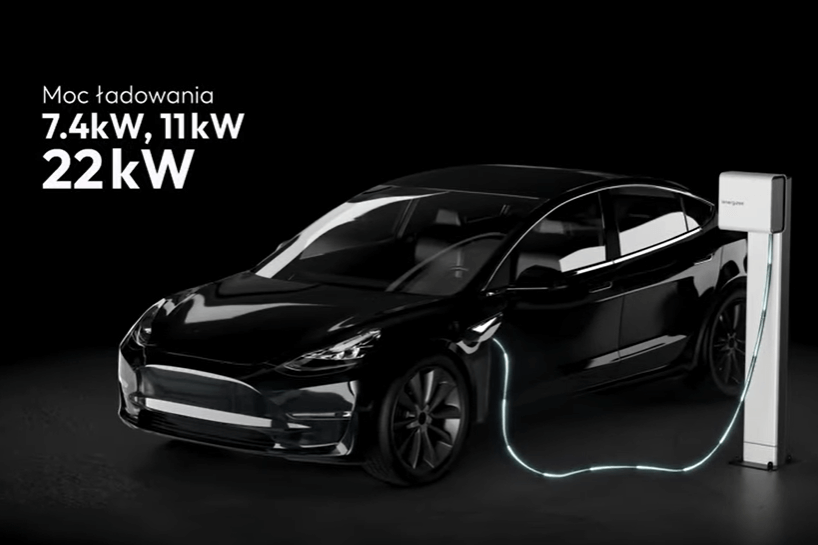
AC charging stations provide power to on-board chargers, where it is converted into direct current. Even though this process may take a little longer, electric vehicle batteries prefer this type of charging. The maximum efficiency of such chargers can reach up to 22 kW.
AC chargers are most often used in private garages. When traveling, you encounter them less and less regularly because they can simply be a nuisance. Imagine a situation where you have to wait several long hours to charge your vehicle in a remote place, far from civilization... Although this is a bit of an exaggeration, the fact is that when charging an electric car outside the home, we want the process to be as quick as possible. That's why fast chargers are becoming more and more popular.
DC chargers powered by direct current - charge quickly and efficiently!
DC stations are equipped with built-in AC/DC converter modules, which enable faster conversion of alternating current (AC) into direct current (DC), without the need to use on-board chargers. This is especially important when planning long intercity routes.
DC chargers can charge your car in less than 30 minutes! Currently, they provide power of up to 150 kW, which is very impressive. In accordance with new EU regulations, charging stations with greater power and in larger numbers will appear on highways. Unfortunately, there are still few of them in Poland, but there are many indications that this trend will change, and soon we will not have to complain about the lack of fast charging stations. More and more Poles are deciding to buy electric cars, and the government subsidy program "My Electrician” only accelerates these changes.
It's essential to note that EV fast chargers generate significantly more heat than AC ones. This is a constant rule that also applies to smartphone chargers - the faster it charges, the faster it heats up. Therefore, DC models are cooled with a special liquid and require the use of a transformer.
Smart Charging
There is another charging method, which is based on the vehicle's central control unit (ECU - computer) and other electronic controllers. Thanks to them, it is possible to optimize energy consumption management and distribution processes. What does it look like in practice?
Smart charging of zero-emission vehicles automatically shifts the vehicle's energy consumption until peak energy demand on the network has ended. This brings many benefits, including minimizing the risk of overload and failure in the power grid, as well as reducing costs related to electricity consumption and promoting a sustainable approach to charging, which helps protect the natural environment.
Does the charging rate depend solely on the charging device?
But not only that! The process of charging electric cars depends on several factors. The condition of the vehicle's battery is of great importance - if the battery is already worn out, charging may take longer and there is a greater risk of shortening its useful life, which may prevent us from reaching our destination before it runs out. That's why proper charging management is so important. Try not to discharge your car below 20% of its charge or charge it above 80%. This way you will extend the battery life.
Another factor that influences the charging rate is the battery capacity. The larger the battery, the more time it takes to charge it. The power of the charger is also important.
Ultimately, the charging speed and range of an electric vehicle also depend on the ambient temperature. The lower the temperature, the longer the charging process takes. EV chargers work best in spring and summer, when weather conditions are stable.
FAQ about chargers for electric vehicles
- How quickly can I charge my electric car?
The charging time of an electric vehicle depends, among other things, on:
- vehicle battery status
- battery capacity
- charger power.
In general, the charging process may take from several dozen minutes to several hours, depending on the type and power of the charger used.
- What are the differences between alternating current (AC) chargers and direct current (DC) chargers?
Alternating current (AC) chargers deliver electricity to on-board chargers, where it is converted to direct current (DC), which is preferred by electric vehicle batteries. In turn, direct current (DC) chargers have built-in AC/DC converter modules, enabling faster charging by directly supplying direct current to the vehicle.
- Does the charging rate depend solely on the type of charger?
Not only the type of charger affects the charging rate of an electric vehicle. Other factors such as:
- vehicle battery status
- battery capacity
- and the ambient temperature also impact the charging time and range of the vehicle.
- Where can you find DC charging stations in Poland?
Direct current (DC) charging stations in Poland are still relatively rare, but the trend towards more of them is becoming more and more visible. More and more charging stations with higher power are being installed on highways and other major communication routes.
- Are there standards for charger connectors for electric vehicles?
Yes, there are different connector standards used in chargers for electric vehicles, such as Type 2 (alternating current - AC), CCS and CHAdeMO (direct current - DC). Many charging stations offer different types of cabling to accommodate different types of connectors.


