


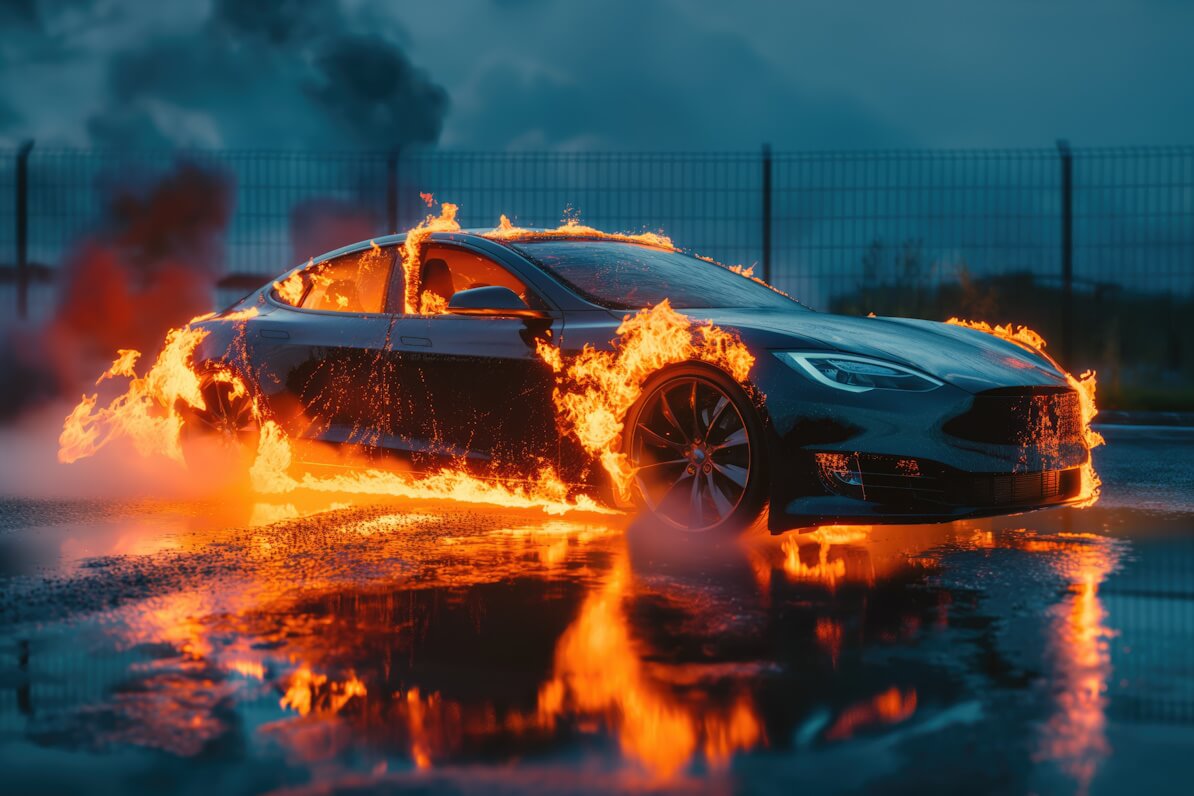
Are electric vehicles more vulnerable to fires than combustion vehicles? Find out what causes fires in electric cars and how to avoid the risks. Check out our safety tips.
Fewer fires, greater safety:
Research on fires in electric cars
Fires in cars are a rare phenomenon, but they pose a serious threat - regardless of the vehicle's drive type. They may be caused by a road collision, intentional arson, manufacturing defects or ordinary use. However, studies show that zero-emission vehicles are more resistant to breakdowns and, when they do occur, they occur much more smoothly. For drivers, this means one thing: a greater sense of security.
Research clearly shows that fires in electric cars are much less common than in combustion vehicles*, and the time to extinguish them is no longer, despite the persistent efforts of opponents of zero-emission vehicles. Unfortunately, the mythology around this topic is starting to take on a life of its own, as in the case of the story about 50 vehicles that allegedly burned down in one of the Polish parking lots. As it turned out, neither the electric vehicle was the cause of the fire, nor did it take 21 hours to extinguish it, but only... 20 minutes.
However, we cannot ignore the fact that a vehicle fire can affect any of us, including owners of electric cars. What could be causing these incidents? What are the differences between an electric vehicle and a combustion vehicle fire? What to do in such a situation? This is what we will talk about in today's blog post.
Mythology vs. reality:
Facts and myths about fires in electric vehicles
Electric cars have been present in our lives for several years. Despite this, they are still surrounded by an aura of mystery, and some people still have doubts about their reliability. The rate at which new information about electricians appears is comparable to the rapid growth of mushrooms after rain, but most of this information is just made up stories that are easily debunked with specialized knowledge. One such myth is the exaggerated story about numerous manufacturing defects that allegedly lead to vehicle explosions and fires. But let's think about it for a moment...
Do you hear explosions coming from a parking lot or gas station every day in your neighborhood? Of course not. Electric vehicle technology undergoes repeated and very rigorous testing before it hits the market. High-quality components and safety systems are used to prevent spontaneous combustion. This is an important aspect of the electric vehicle industry, which is constantly being developed and improved.
It should be noted that for a fire to occur in an electric vehicle, several factors must occur simultaneously. However, thanks to a carefully developed design and the use of appropriate safeguards, such incidents occur much less frequently than in the case of combustion vehicles.
Electric vehicles vs. exhaust:
Comparison of fire risk and safety measures
Electric vehicles (EV) have a completely different structure than combustion cars. The key difference is the lack of a fuel system, spark plugs and catalytic converter. Additionally, they do not contain flammable liquids, which significantly reduces the risk of fire.
Interesting is the fact that crash tests of electric cars, carried out at speeds significantly exceeding standard tests, showed that after hitting an obstacle, the voltage in the vehicles was immediately disconnected, which effectively prevented fires. This type of research was carried out by the German Motor Vehicle Inspection Association DEKRA and the University Medical Center in Göttingen.
It is worth noting that in the case of combustion vehicles, the route the fuel must travel is relatively long and winding. The tank is usually located at the rear of the vehicle, while the engine is located at the front. This means that the fuel must travel the entire length of the car, which increases the risk of the fire spreading to the entire vehicle, which is a serious threat.
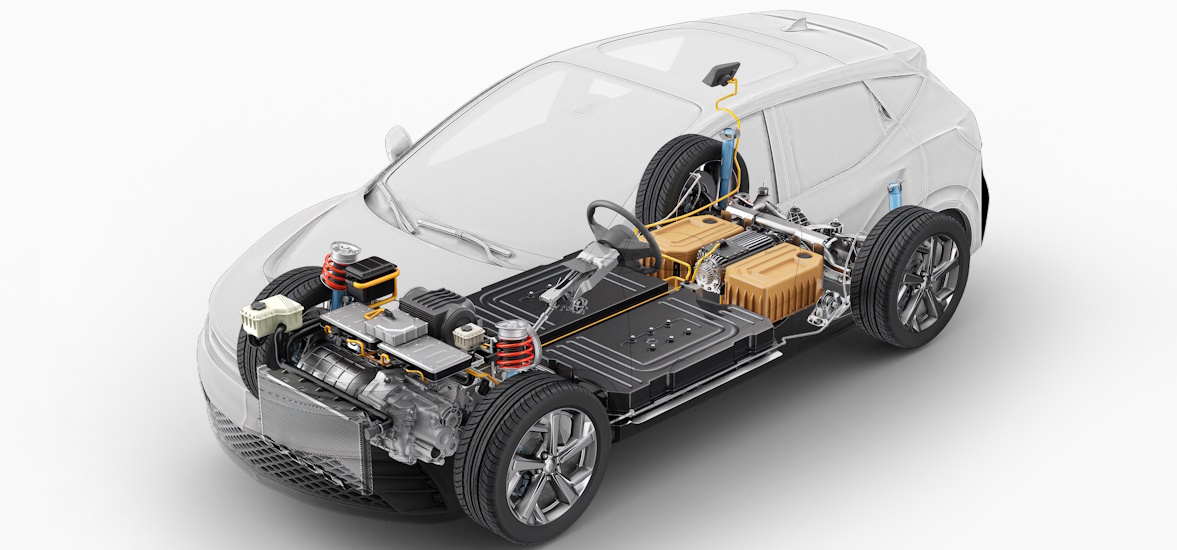
In the case of electric vehicles, the battery is located in one section of the vehicle, which reduces the risk of spontaneous combustion. In addition, it is additionally protected by a special frame that protects against external shocks, heat and vibrations, and contains a high-voltage and low-voltage installation, as well as a battery energy management system that controls the temperature inside the device.
Sources of danger: What causes fires in electric cars?
Practical safety tips
Electric vehicles on fire: How to respond to fire and how to avoid hazards?
There are several factors that can cause a fire in an electric car.
These include:
- Road collisions – when traveling on the road, there is always a risk of an accident, regardless of compliance with the regulations. In the event of a collision, electric cars are equipped with innovative lithium-ion cells and a reinforced structure, which minimizes the risk of battery damage.
- Temperature – batteries in electric vehicles are sensitive to temperature changes. Overcharging the battery (which generates heat during charging), leaving the car in the sun or not protecting it from frost can increase the risk of an explosion inside the battery. Both high and very low temperatures can also cause undesirable chemical reactions, which in extreme cases may lead to fire.
- Battery overcharging – although the process of charging an electric car is relatively simple, you should take care of the proper condition of the battery. Frequent overloading or unloading to zero can lead to technical problems or even a fire. Therefore, it is recommended to charge up to 80 % and avoiding discharge below 20%, which helps keep the battery in optimal condition and extends its life. However, it is worth noting that some modern electric vehicles are not susceptible to "electrical abuse", which eliminates the risk of fire in the battery.
To sum up, several factors are usually necessary for a fire to occur in an electric car. Despite this, these vehicles undergo strict safety tests and have appropriate safeguards that reduce the risk of fire. However, remember to properly charge and protect your vehicle against extreme weather conditions.
FAQ:
Everything you need to know about fires in electric cars:
1. Are electric vehicles more susceptible to fires than combustion vehicles?
No, research clearly shows that fires in electric cars are much less common than in combustion vehicles. Moreover, the fire extinguishing time for electric vehicles is no longer.
2. What can cause fires in electric vehicles?
There are several factors that can cause a fire in an electric vehicle, including traffic collisions, temperature changes and overcharging the battery.
3. Are batteries in electric vehicles more prone to explosions?
Batteries in electric vehicles are sensitive to temperature changes and overcharging, which may lead to an increased risk of explosion inside the battery. However, appropriate safeguards reduce this risk.
4. What are the differences between an electric vehicle and a combustion vehicle fire?
The key difference is the lack of a fuel system and flammable liquids in electric vehicles, which significantly reduces the risk of fire. In addition, crash tests show that the voltage in electric vehicles is disconnected immediately after impact, which effectively prevents fires.
5. What to do in the event of an electric vehicle fire?
In the event of an electric vehicle fire, exit the vehicle immediately and call for help. It is also important to avoid overcharging the battery and ensure proper charging conditions.
6. What are the recommendations for charging electric vehicles?
It is recommended to charge up to 80% and avoid discharging below 20%, which helps keep the battery in optimal condition and extends its life. However, modern electric vehicles are less and less susceptible to "electrical abuse", which eliminates the risk of fire in the battery.
7. Does electric vehicle technology undergo rigorous safety testing?
Yes, electric vehicle technology undergoes multiple and very rigorous safety tests before it hits the market. High-quality components and safety systems are used to prevent spontaneous combustion.


